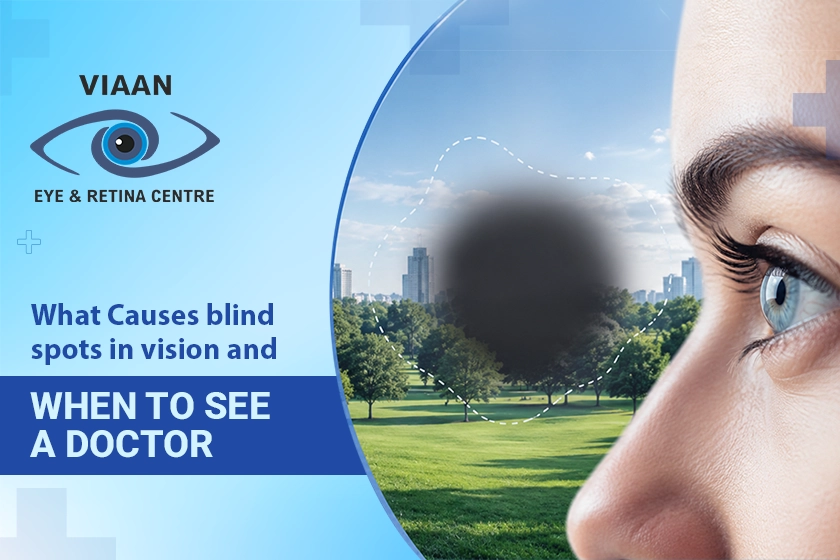
A blind spot can feel scary. You may look at something and feel that one small part is missing. You may see a dark patch, a blurry spot, a grey area or a blank space. Sometimes it may come for a short time. Sometimes it may stay for longer.
blind spots in vision means there is a part of your sight where you cannot see clearly. It can happen in one eye or both eyes. It can be small or big. It can happen suddenly or slowly. Some blind spots are not serious but some can be a sign of an eye problem.
This is why it is important to understand the cause. Eye problems should not be ignored, especially when vision changes are new or sudden.
What Do Blind Spots Look Like?
Blind spots do not look the same for everyone. Some people see a black spot. Some people see a blurry patch. Some may see flashing lights or a shining line. Some may feel that words are missing while reading.
At times, the brain tries to fill the missing part. Because of this, a person may not notice the problem early. This can happen when only one eye is affected. The other eye may cover the problem for some time.
blind spots in vision can affect reading, walking, driving, using a phone or seeing faces clearly. Even a small change can make daily life difficult.
Common Causes of Blind Spots
There can be many reasons behind blind spots. Some are simple. Some need fast medical care.
1. Migraine
Migraine can cause temporary blind spots. Some people see flashing lights, zigzag lines, bright shapes or blurry patches before a headache starts. This is called migraine aura.
In many cases, this type of blind spot goes away after some time. But if it happens for the first time or if it feels different from usual, it is better to see a doctor.
2. Retina Problems
The retina is the thin layer at the back of the eye. It helps you see. It works like a screen inside the eye. If the retina is weak, swollen, torn or damaged, vision can change.
Retina problems can cause flashes, floaters, blurred vision or missing areas in sight. blind spots in vision can also happen when the retina is not working properly.
Retina problems should be checked early. Waiting too long may make the condition worse.
3. Diabetic Eye Disease
People with diabetes need regular eye check ups. High sugar levels can damage small blood vessels inside the eye. This can affect the retina.
In the early stage, a person may not feel any major problem. Later, vision may become blurry or patchy. Some people may see dark spots or floating spots.
Diabetic eye disease can become serious if it is not treated on time. Good sugar control and regular eye tests are very important.
4. Glaucoma
Glaucoma is an eye disease that affects the optic nerve. The optic nerve sends signals from the eye to the brain.
In many cases, glaucoma starts slowly. A person may not feel pain. Vision loss may begin from the side area. This is why many people do not notice it early.
blind spots in vision caused by glaucoma can become worse with time. Regular eye check ups can help find glaucoma before major vision loss happens.
5. Optic Nerve Problems
The optic nerve is very important for clear sight. If this nerve is swollen, weak or damaged, vision can become dull, blurry or patchy.
Some people may also feel pain when moving the eye. Some may see colours as less bright. An optic nerve problem needs proper eye testing.
6. Eye Injury
An eye injury can also cause blind spots. A hit, scratch, chemical splash or sharp object can harm the eye.
Even if the eye looks normal from outside, there may be damage inside. If a blind spot appears after an injury, do not wait. Visit an eye doctor as soon as possible.
7. Age Related Eye Changes
As people grow older, eye problems can become more common. The retina, lens and eye nerves may become weaker with age.
Older adults may notice blurry vision, dark spots or missing areas in sight. These changes should not be treated as normal ageing without an eye check up.
When Should You See a Doctor?
You should see an eye doctor if the blind spot is new. You should also visit a doctor if the blind spot is growing, coming again and again or making daily work hard.
Do not ignore blind spots in vision if they come with:
-
Sudden blurred vision
-
Eye pain
-
Flashes of light
-
New floaters
-
Headache
-
Trouble reading
-
Trouble seeing from the side
-
Vision loss in one eye
-
Double vision
You should get urgent care if vision loss happens suddenly. You should also get urgent care if vision changes come with weakness, dizziness, confusion or trouble speaking.
These signs may point to a serious problem. It is always safer to get checked.
How Eye Doctors Check Blind Spots
An eye doctor may do a few simple tests. These tests help find the real cause of the blind spot.
The doctor may check your vision. They may check eye pressure. They may look at the retina with special machines. They may also do a field vision test to see which part of your sight is affected.
Sometimes an OCT scan may be needed. This scan gives a clear picture of the retina. It helps doctors see swelling, damage or other changes inside the eye.
The treatment depends on the cause. Migraine, retina disease, glaucoma, diabetes and nerve problems all need different care.
Can Blind Spots Be Treated?
Yes, many cases can be treated or controlled. But treatment depends on what is causing the blind spot.
If migraine is the reason, the doctor may suggest migraine care. If diabetes is the reason, sugar control and retina treatment may be needed. If glaucoma is the reason, eye drops, laser or surgery may help control it.
If the retina is torn or damaged, quick treatment may be needed. This is why blind spots in vision should be checked early.
Early care can protect vision. Late care can make treatment harder.
Simple Tips to Protect Your Eyes
Eye care does not have to be difficult. Small habits can help.
Go for regular eye check ups. Control diabetes and blood pressure. Take breaks from screens. Wear safety glasses when needed. Do not rub your eyes too much. Do not use random eye drops without advice.
Also, do not ignore sudden vision changes. Eyes are delicate. A small sign can sometimes point to a bigger issue.
Conclusion
blind spots in vision can happen due to migraine, retina problems, diabetes, glaucoma, optic nerve issues, injury or age related changes. Some blind spots go away but some need fast care.
If the spot is sudden, painful, growing or comes with flashes, floaters or vision loss, visit an eye doctor without delay. For proper eye testing and care from a retina eye specialist, patients can visit Viaan Eye and Retina Centre for advanced eye and retina check ups.