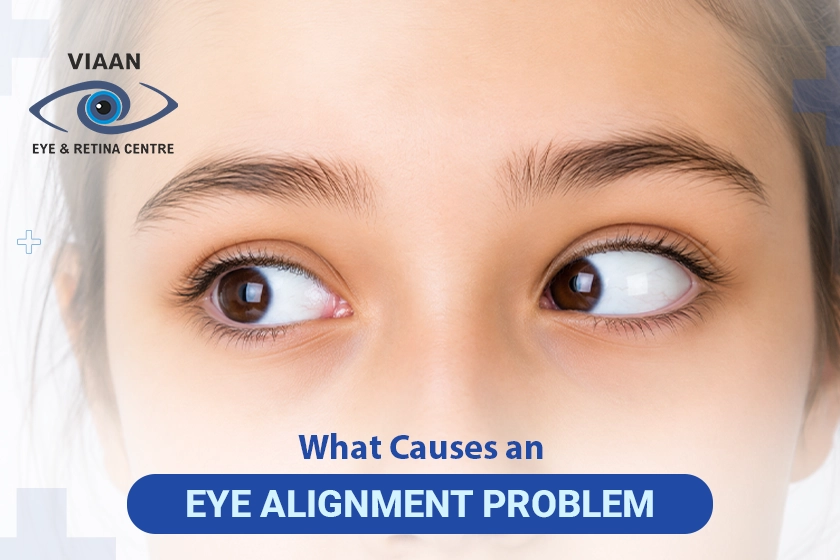
An eye alignment problem happens when both eyes do not look in the same direction. One eye may look straight, but the other eye may turn inside, outside, up or down. This condition is also called squint.
It can happen in children and adults. In some people, it is clear all the time. In some people, it shows only when they are tired, sick or trying to focus on something. It may look like a small issue, but it can affect vision, reading, walking and daily life.
The good part is that many cases can be treated or managed. Early check up is very important. It helps the doctor find the real cause and start the right care.
What Does Eye Alignment Mean?
Eye alignment means both eyes look at the same object together. When both eyes work well the brain receives one clear picture. This helps a person see clearly and judge distance properly.
An eye alignment problem means both eyes are not working together in the right way. One eye may move away from the other eye. This can confuse the brain.
In children the brain may start ignoring the weaker eye. This can lead to poor vision in that eye. In adults, it may cause double vision. This means the person may see two images of one object.
Common Causes of Eye Alignment Problems
There can be many causes behind this condition. Sometimes the cause is simple. Sometimes it is linked to eye muscles, nerves, vision power or health problems.
1. Weak Eye Muscles
The eyes move with the help of small muscles. These muscles help the eyes move left, right, up and down. Both eyes must move together.
If one muscle is weak or too tight the eyes may not stay in the same position. This can make one eye turn in another direction.
This type of eye alignment problem may start in childhood. It can also happen later in life.
2. Nerve Problems
Nerves send signals from the brain to the eye muscles. These signals tell the eyes how to move.
If the nerves are weak or damaged the eyes may not move together. This can cause one eye to turn or move differently.
Nerve problems can happen due to diabetes, injury, stroke or other health issues. If eye misalignment starts suddenly in an adult, it should be checked quickly.
3. Difference in Eye Power
Some people have different power in both eyes. One eye may see clearly, while the other eye may not see well. This can make it hard for both eyes to work together.
Children with high power or unequal power in both eyes may develop an eye alignment problem. In some cases, glasses can help. This is why children should get their eyes checked early.
4. Lazy Eye
Lazy eye is also called amblyopia. It happens when one eye does not develop good vision. The brain starts using the better eye more. The weaker eye gets ignored.
Over time the weaker eye may turn inward or outward. This can make the eye alignment worse.
Lazy eye should be treated early. If treatment is delayed the child may have long term vision problems.
5. Family History
Family history can also play a role. If parents, grandparents or siblings have squint, a child may have a higher chance of getting it.
This does not mean every child in the family will have the same problem. But parents should watch for signs like eye turning, head tilting or poor focus.
An early eye check up can help find the issue before it becomes serious.
6. Childhood Development Issues
Some children may have eye alignment problems because of early development issues. This may happen in children born early or children with some brain or nerve problems.
In such cases the doctor may check eye movement, vision power and eye health. A full eye test helps in understanding the problem better.
An eye alignment problem in children should never be ignored. Early care can protect vision and make treatment easier.
7. Eye Injury or Head Injury
An injury can also cause eye misalignment. A hit near the eye can affect the eye muscles. A head injury can affect the nerves or brain signals that control eye movement.
If the eye starts turning after an injury, medical care is needed. Do not wait for it to improve on its own.
Injury related eye problems can become worse if they are not checked on time.
8. Health Problems in Adults
Adults can also develop eye misalignment. It may happen due to diabetes, thyroid eye disease, stroke, nerve weakness or ageing.
In adults the problem may cause sudden double vision. It may also cause eye strain, headache or trouble walking straight.
An eye alignment problem in adults needs proper testing. The doctor may also check for other health causes.
Signs of an Eye Alignment Problem
The signs can be different for each person. Some signs are easy to see. Some are mild and may be missed.
Common signs include:
-
One eye turns inside or outside.
-
One eye moves up or down.
-
The person sees double.
-
The child tilts the head often.
-
The person closes one eye while looking.
-
Reading becomes hard.
-
There is eye strain or headache.
-
The person has trouble judging distance.
-
The eyes do not look balanced.
If these signs happen again and again, an eye check up is important.
How Doctors Check the Eyes
An eye doctor checks vision, eye power, eye movement and eye coordination. The doctor may ask the person to look in different directions. This helps check how both eyes move.
For children the doctor may also check for lazy eye. Eye drops may be used to measure the correct glasses power.
An eye alignment problem cannot always be judged only by looking at the face. A proper eye test is needed to know the real reason.
Treatment Options
Treatment depends on the cause, age and seriousness of the problem. Some people may need glasses. Some may need patching for lazy eye. Some may need eye exercises.
In some cases, special prism glasses may help with double vision. In other cases, eye muscle surgery may be needed. Surgery helps adjust the eye muscles so both eyes can stay in a better position.
The right treatment is different for every person. This is why a proper diagnosis is important.
Why Early Treatment Matters
Many people think eye misalignment is only about appearance. This is not true. It can affect vision and daily comfort.
In children, delayed treatment can lead to lazy eye. It can also affect depth vision. This means the child may find it hard to judge distance.
In adults, treatment can help reduce double vision and eye strain. It can also improve comfort while reading, working and moving around.
An eye alignment problem is easier to manage when it is found early.
Conclusion
An eye alignment problem can happen because of weak eye muscles, nerve problems, different eye power, lazy eye, family history, injury or health issues. It can affect children and adults.
It may cause eye turning, double vision, headache, poor focus or trouble judging distance. Early eye check up can help protect vision and improve comfort.
If you are seeking for a proper diagnosis and care from a Senior Eye Surgeon you can visit Viaan Eye and Retina Centre for complete eye evaluation and treatment.