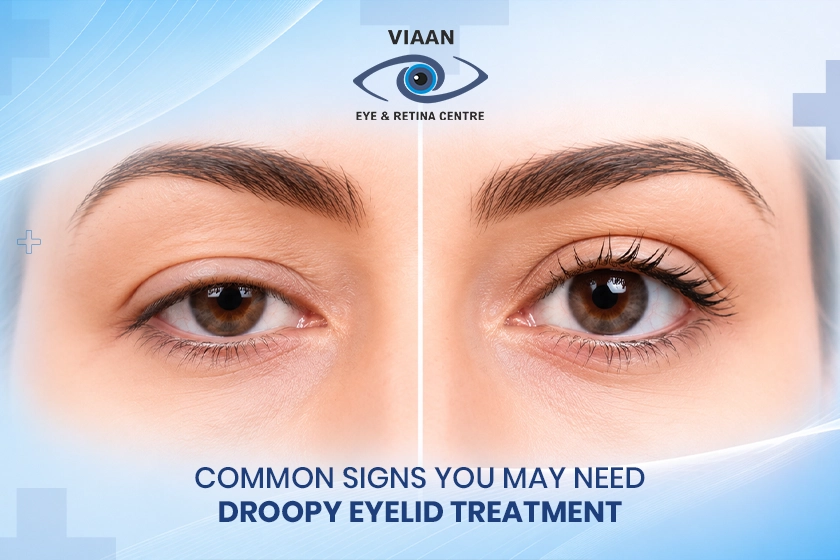
A droopy eyelid may look like a small beauty concern at first. But sometimes, it can affect vision, eye comfort and daily life. In medical terms, a droopy upper eyelid is called ptosis. It happens when the upper eyelid sits lower than normal and may partly cover the eye or the pupil.
Some people are born with it. Others notice it slowly with age, after an injury or because of muscle or nerve related problems. Droopy eyelid treatment may be needed when the eyelid starts blocking vision or making the eyes feel heavy.
Signs That Show You May Need Droopy Eyelid Treatment
1. Your Upper Eyelid Looks Lower Than Usual
The most common sign is simple. One or both upper eyelids may sit lower than normal.
You may notice it in the mirror. Or someone may point it out in photos. The eyelid may cover only a small part of the eye or it may come down more clearly.
If the droop keeps increasing, it is better to get it checked. Droopy eyelid treatment can help when the eyelid position starts affecting appearance, comfort or vision.
2. Your Vision Feels Blocked
A droopy eyelid can cover the upper part of your vision. You may feel like something is always coming in the way.
This can make reading, driving, using a screen or looking straight ahead harder. The American Academy of Ophthalmology explains that ptosis may droop a little or enough to cover the pupil.
When vision starts getting blocked the issue is not only cosmetic. It becomes a daily life problem. This is one of the stronger signs that you may need Droopy eyelid treatment.
3. You Keep Raising Your Eyebrows
Many people with droopy eyelids lift their eyebrows without knowing it. They do this to pull the eyelid up and see better.
At first, it may not feel serious. But over time, it can cause forehead strain and tiredness around the eyes.
If you keep raising your brows just to keep your eyes open, it may be time to ask about Droopy eyelid treatment.
4. Your Eyes Feel Heavy or Tired
Eye tiredness is another common sign. When your eyelids feel heavy your eyes may work harder than usual.
You may feel more tired while reading, watching TV, using a laptop or doing close work.
This tired feeling may become worse by evening. Some people also feel mild strain around the forehead.
Droopy eyelid treatment may help if the heaviness is making normal tasks uncomfortable.
5. You Tilt Your Head Back to See Clearly
Some people start tilting their head backward to see properly. This usually happens when the eyelid blocks part of the visual field.
Children may do this often if they have ptosis. Adults may also form this habit slowly.
A constant head tilt can lead to neck discomfort. It can also make reading, walking or looking at people feel awkward.
If you or your child often tilts the head to see better, an eye check up is important.
6. One Eye Looks Smaller Than the Other
A droopy eyelid can make one eye look smaller. This may be more visible in selfies, family photos or video calls.
Sometimes the difference is mild. In other cases, one eyelid may sit much lower.
While appearance is personal, a visible difference can also point to an eyelid muscle issue. Droopy eyelid treatment can improve balance when advised by a specialist.
7. Your Child Has a Droopy Eyelid
In children, droopy eyelids need careful attention. A low eyelid may affect visual development if it blocks the eye. Pediatric eye experts note that treatment may be needed when vision problems cannot be corrected with glasses or other care.
Parents should watch for signs like:
-
One eyelid sitting lower
-
Head tilting backward
-
Squinting
-
Poor eye contact
-
Trouble seeing clearly
-
One eye looking smaller
Early care can help protect a child’s vision and comfort.
8. You Notice Sudden Eyelid Drooping
A droopy eyelid that appears suddenly should not be ignored.
Sometimes, ptosis can be linked with nerve, muscle or health related conditions. Cleveland Clinic lists causes such as injury, nerve related problems, myasthenia gravis, stroke, tumor and other conditions.
This does not mean every droopy eyelid is serious. But sudden changes should be checked quickly, especially if there is double vision, headache, weakness or pupil changes.
Quick Signs to Notice
|
Sign |
What You May Notice |
|
Eyelid looks low |
Eye looks partly closed |
|
Vision feels blocked |
Trouble seeing upward or straight |
|
Raised eyebrows |
Forehead feels tired |
|
Head tilt |
Neck strain or awkward posture |
|
One eye looks smaller |
Uneven appearance |
|
Child tilts head |
Possible vision difficulty |
When Should You See a Doctor?
You should not wait too long if the eyelid blocks your vision, gets worse or causes daily discomfort.
A doctor can check eyelid position, eye movement, vision and possible causes. Treatment depends on the reason and severity. In many cases, surgery may be advised when ptosis affects vision or function.
Droopy eyelid treatment is not the same for everyone. Some people may need surgery. Some may need care for an underlying cause. A proper eye check up helps decide the right option.
Conclusion
A droopy eyelid can affect more than appearance. It can disturb vision, make the eyes feel tired, create forehead strain and affect a child’s visual growth. Signs like blocked vision, eyebrow lifting, head tilting, sudden drooping or one eye looking smaller should not be ignored.
Timely care can make daily life easier and protect eye health. Viaan Eye and Retina Centre offers expert guidance for patients who may need Droopy eyelid treatment from an experienced eye specialist doctor.