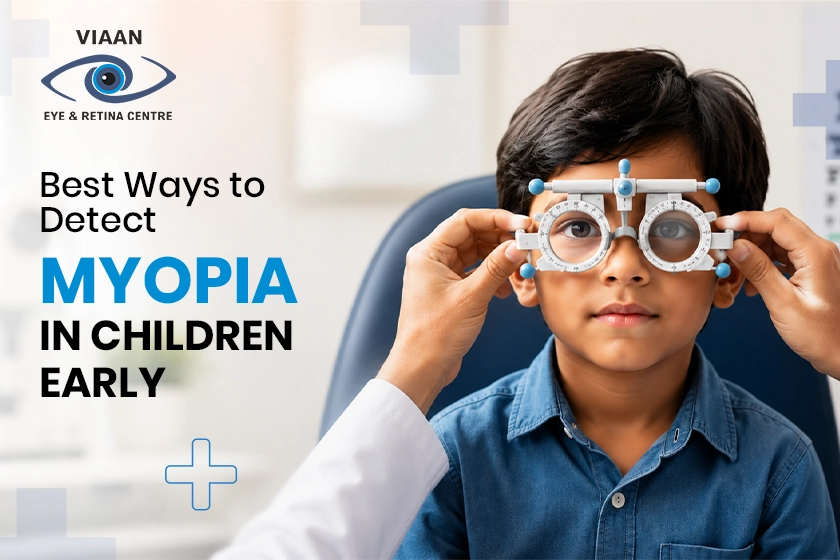
Children do not always know how to explain vision problems. They may think blurry distance vision is normal. They may not say, “I cannot see the board clearly.” Instead they may sit closer to the TV, rub their eyes or avoid reading from far away.
This is why parents and teachers should watch small signs carefully. Early checking of myopia in children can help avoid learning problems, eye strain and daily discomfort.
Myopia means near objects look clear but far objects look blurry.
The National Eye Institute says common symptoms include trouble seeing far away, squinting and eye strain. It is diagnosed through an eye exam.
Why Early Detection Is Important For Everyone
Early detection is very important because children use their eyes all day. They read books, look at the board, use screens, play games and move around outdoors.
If distance vision is weak, schoolwork can feel harder. The child may lose interest, not because they are lazy but because they cannot see properly.
Finding myopia in children early helps parents get the right guidance at the right time. It also helps teachers understand why a child may be struggling in class.
Warning Signs of Myopia in Children You Should Not Ignore
1. Watch How Your Child Looks at Distant Objects
One of the first signs is difficulty seeing things far away. Your child may not be able to read the classroom board, road signs or objects across the room.
You may notice that they sit very close to the television or bring devices close to their face.
This can be a simple clue that myopia in children needs attention.
Do not ignore this habit if it happens often.
2. Notice Frequent Squinting
Squinting is another common sign. A child may narrow their eyes to make distant things look clearer.
They may do it while watching TV, looking at the board or trying to see something outside.
Squinting once in a while is normal. But regular squinting may show that the eyes are working too hard.
A proper eye check up can help confirm the reason. Detecting myopia in children at this stage can save the child from months of unclear vision.
3. Look for Headaches and Eye Strain
Children may not always say their eyes are tired. They may complain of headaches, especially after school, reading or screen use.
Eye strain can also make them feel irritated or sleepy.
Some children rub their eyes again and again. Others may avoid homework or reading tasks.
These signs can be linked with many things but they should not be ignored. Myopia in children can sometimes show up through these small daily complaints.
4. Check School Performance and Classroom Behaviour
Vision problems can affect learning. A child who cannot see the board may copy wrong notes or miss instructions.
Teachers may notice that the child asks friends for help, loses focus or moves closer to the front.
Sometimes, parents think the child is careless. But the real problem may be unclear vision.
This is why schools and parents should work together. Early signs seen in class can help detect myopia in children faster.
5. Observe Screen and Reading Habits
Screens are now part of normal life. Children use them for school, entertainment and learning.
Still, too much close work can put stress on the eyes. The American Academy of Ophthalmology advises more outdoor time and balanced screen use for children as part of myopia control.
Parents should watch if the child holds phones too close, bends very near books or complains after screen time.
Good habits can support eye comfort.
6. Plan Regular Eye Check Ups
A regular eye check up is one of the best ways to catch problems early.
Do not wait only for strong symptoms. Some children adjust to blurry vision and never complain.
An eye doctor can check vision, eye power, eye movement and overall eye health.
For myopia in children, timely eye testing helps decide whether glasses or other care is needed.
7. Ask About Family History
Family history matters. If one or both parents have myopia the child may have a higher chance of developing it.
This does not mean it will surely happen. But it does mean parents should be more alert.
A child with a family history should not skip eye check ups.
Early action is better than waiting for the problem to become clear.
8. Encourage More Outdoor Time
Outdoor play is good for the body and eyes. Studies have found that more time outdoors can help reduce the risk of developing myopia in children.
Children do not need complicated outdoor activities. Simple play, walking, cycling, running or sports can help them spend more time away from close screens and books.
A balanced daily routine is always better.
Simple Eye Care Habits at Home
Parents can support better eye health with small habits.
Try these steps:
-
Keep reading material at a comfortable distance
-
Ensure good lighting while studying
-
Give breaks during screen use
-
Encourage outdoor play every day
-
Avoid long screen sessions without rest
-
Watch for sudden changes in vision
-
Take the child for regular eye exams
These habits do not replace medical care but they can support healthy vision.
Conclusion
Children may not always explain blurry vision clearly, so parents and teachers must notice the signs early. Sitting close to screens, squinting, headaches, eye rubbing and trouble seeing the board can all be important clues.
Early detection of myopia in children can support better learning, comfort and confidence.
Viaan Eye and Retina Centre offers careful eye care for children and guidance from an eye specialist for kids, helping families understand vision needs at the right time.