

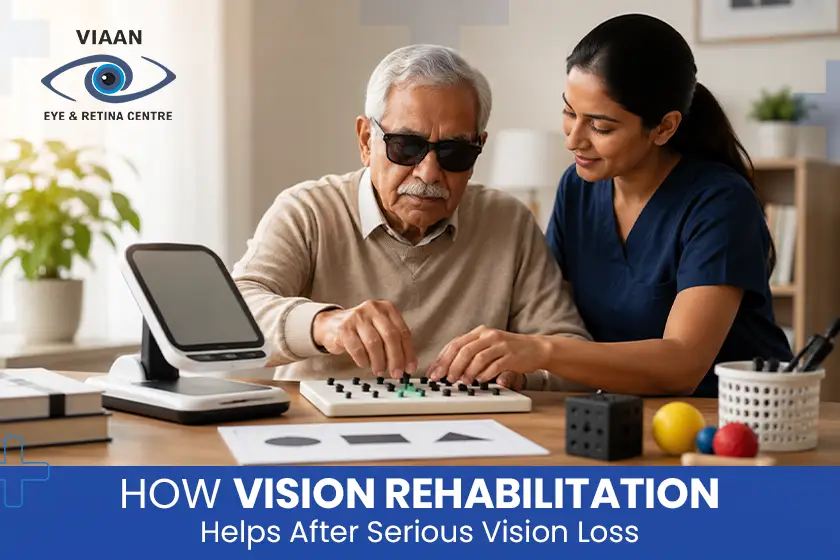
Losing vision can change daily life in many ways. Simple tasks like reading a phone message, walking in a new place, cooking, watching television or recognizing faces may become difficult. It can feel scary at first and that is very natural.
But serious vision loss does not always mean a person has to stop living independently. With the right support, training, tools and guidance, many people can learn new ways to manage daily life. This is where vision rehabilitation can help.
It focuses on using the remaining sight in the best possible way. It also teaches practical skills that make everyday tasks safer and easier.
What Does Vision Rehabilitation Mean?
After serious vision loss, regular glasses, medicines or surgery may not fully restore sight in some cases. The National Eye Institute explains that low vision is usually permanent but support tools and training can help people do daily activities more easily.
Vision rehabilitation is a planned support process for people who have difficulty seeing even after treatment or glasses.
It may include:
-
Eye assessment
-
Use of magnifiers or special devices
-
Reading support
-
Mobility training
-
Home safety changes
-
Daily living skills
-
Emotional support
-
Digital tools and assistive technology
The main goal is simple. It helps a person live with more confidence.
Why Vision Rehabilitation Is Needed After Serious Vision Loss
Vision loss can affect more than the eyes. It can affect confidence, movement, mood, work, study and personal safety.
A person may feel dependent on others for small tasks. This can be frustrating.
The National Eye Institute says support services can help people with visual impairment make the most of the sight they have and improve quality of life.
This support is useful for people with vision loss caused by conditions such as diabetic eye disease, glaucoma, age related macular degeneration, retinal problems, optic nerve damage or eye injury.
How Vision Rehabilitation Helps People Live More Independently
Helping With Daily Activities
One of the biggest benefits is practical daily support.
Vision rehabilitation teaches people how to do common tasks in a new way. This may include reading labels, using kitchen items safely, managing medicines, using a phone or finding things at home.
Small changes can make a big difference.
For example, a person may learn to:
-
Use better lighting
-
Keep items in fixed places
-
Use large print labels
-
Increase phone text size
-
Use contrast colors
-
Arrange furniture safely
-
Use talking devices
These steps may look simple but they can bring back a sense of control.
Better Reading and Writing Support
Reading is often one of the first problems after serious vision loss. Books, bills, medicine labels, phone messages and forms may become hard to see.
With vision rehabilitation, patients may learn how to use magnifiers, large print material, screen readers or digital zoom features.
The American Academy of Ophthalmology notes that rehabilitation teams assess how the eyes function, how a person completes tasks and what their personal goals are.
This means the support is not the same for everyone. It depends on what the person needs in daily life.
Safer Movement and Mobility
Moving around safely is very important after serious vision loss. Stairs, uneven roads, crowded spaces and new places can become stressful.
Vision rehabilitation can also include mobility guidance. This helps people move with better awareness and less fear.
A person may learn how to:
-
Use remaining side vision better
-
Walk safely in familiar areas
-
Notice obstacles
-
Manage steps and crossings
-
Use a cane if needed
-
Travel with more confidence
Safety training can reduce fear and help people stay more active.
Support Through Useful Devices
Technology has made life easier for many people with vision problems. Some devices are very simple, while others are advanced.
Useful support tools may include:
|
Tool or Method |
How It Helps |
|
Hand magnifier |
Helps read small text |
|
Large print books |
Makes reading easier |
|
Bright task light |
Improves visibility |
|
Screen reader |
Reads digital text aloud |
|
Phone zoom feature |
Enlarges messages and apps |
|
Contrast labels |
Helps identify items faster |
Modern vision rehabilitation may include training on these devices so people can use them properly.
A device is helpful only when the person knows how to use it in real life.
Building Confidence Again
Vision loss can make a person feel low, worried or unsure. They may stop going out, meeting people or doing hobbies.
That is why emotional support matters too.
Vision rehabilitation is not only about devices and training. It is also about helping a person feel stronger from inside.
With the right guidance, people can slowly return to activities they enjoy. They may start reading again, cooking safely, using their phone better or walking more confidently.
This progress may happen step by step but every small win matters.
Helping Families Understand the Change
Family members also need guidance. They may want to help but they may not know the right way.
Sometimes, too much help can make the person feel dependent. Too little help can make them feel alone.
A proper support plan teaches families how to make the home safer and how to encourage independence.
Families can help by:
-
Keeping walkways clear
-
Avoiding sudden changes in furniture placement
-
Using bright lighting
-
Labelling important items
-
Speaking clearly before offering help
-
Encouraging the person to do tasks independently
This creates a more supportive home environment.
When Should Someone Seek Help?
A person should seek help if vision loss is affecting daily activities, safety, confidence, reading, movement, work or study.
It is better not to wait until life becomes too difficult.
Research based clinical guidance says rehabilitation is not only for advanced cases. It can also help people with early or moderate vision loss.
Early support can make adjustment easier and reduce stress.
Conclusion
Serious vision loss can feel life changing but the right support can make daily life easier and safer. Training, useful tools, home changes, mobility guidance and emotional support can help people use their remaining sight better.
Vision rehabilitation can help patients regain confidence and continue important daily activities with more independence.
Viaan Eye and Retina Centre supports patients with careful eye care, practical guidance and expert help from the best eye surgeon in Gurgaon when advanced eye evaluation or treatment is needed.