

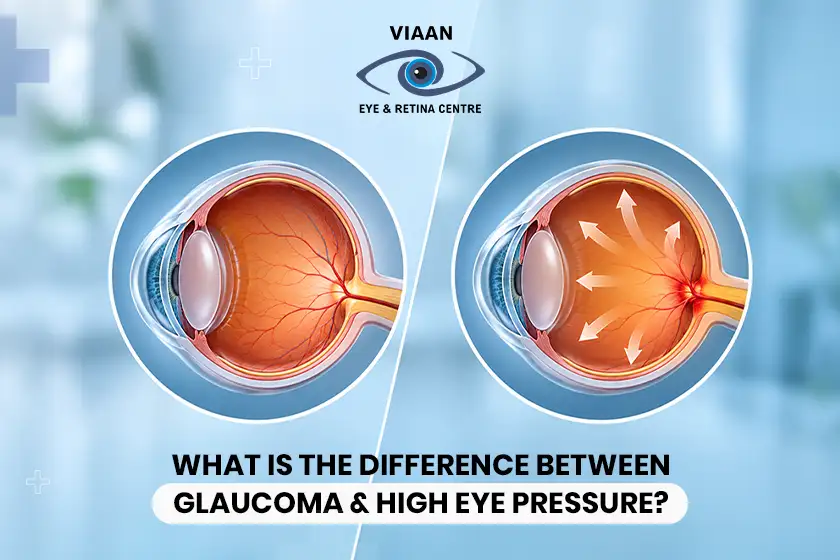
Glaucoma and high eye pressure are often spoken about together, so it is easy to think they mean the same thing. They do not. A person can have high pressure inside the eye and still not have glaucoma.
The easiest way to understand glaucoma vs hypertension is to look at the optic nerve. In ocular hypertension, pressure is high but the nerve is still healthy. In glaucoma the optic nerve has started to show damage.
What Is High Eye Pressure?
The eye has a clear fluid that keeps moving in and out. If this fluid does not drain well, pressure inside the eye can rise.
A high reading is often called ocular hypertension when there is no glaucoma damage. This is why one glaucoma eye pressure result does not tell the whole story.
When doctors compare glaucoma vs hypertension they also look at the optic nerve, vision, age, family history and other risk factors.
What Is Glaucoma?
Glaucoma is a group of eye conditions that damage the optic nerve. This nerve carries visual information from the eye to the brain.
Some people develop glaucoma even when their glaucoma eye pressure is not very high.
That is an important point in glaucoma vs hypertension. Pressure matters but nerve damage is what separates glaucoma from simple ocular hypertension.
Difference Between Glaucoma vs High Eye Pressure
The two conditions are related but they are not the same.
| Conditions | High Eye Pressure | Glaucoma |
| Eye pressure | Often higher than normal | May be high or normal |
| Optic nerve | No glaucoma damage | Damage is present |
| Vision | Usually not affected early | Vision may be lost over time |
| Symptoms | Often none | Often none in early stages |
| Follow up | Regular checks may be needed | Treatment and checks are needed |
This is why glaucoma vs hypertension should never be judged only by one pressure number.
Does High Eye Pressure Always Lead to Glaucoma?
No. Some people can have high pressure for years without developing glaucoma.
At the same time, some people can develop nerve damage even when their glaucoma eye pressure looks normal. Every eye is different.
So, in glaucoma vs hypertension, high pressure is better seen as a risk factor, not a final diagnosis.
What Eye Pressure Is Considered High?
Eye pressure is measured in millimetres of mercury or mmHg. Doctors use a general range as a guide but they do not rely on one fixed number for every person.
A glaucoma eye pressure reading can be affected by corneal thickness, time of day, medicines and other eye conditions.
This is another reason glaucoma vs hypertension needs a full eye check rather than a quick conclusion from one test.
Are There Any Symptoms?
High eye pressure often causes no symptoms. Early glaucoma may also stay quiet for a long time.
Possible warning signs in some forms of glaucoma can include sudden eye pain, redness, blurry vision, halos around lights or nausea. These signs are not seen in every case.
That is why glaucoma eye pressure should be checked during regular eye exams instead of waiting for symptoms.
How Do Doctors Check for Glaucoma?
Doctors do more than measure eye pressure.
They may examine the optic nerve, test side vision, measure corneal thickness and use scans to look for changes.
This helps them understand glaucoma vs hypertension more clearly. If pressure is high but the nerve looks healthy, regular monitoring may be enough. If nerve damage is present, treatment may be needed.
Who May Need More Regular Eye Checks?
Some people may need closer follow up. This can include people with a family history of glaucoma, older adults, people with very high pressure or those who have had an eye injury.
If your glaucoma eye pressure has been higher than expected, regular checks can help the doctor notice any change early.
In glaucoma vs hypertension, follow up matters because ocular hypertension can sometimes turn into glaucoma.
How Is High Eye Pressure Managed?
Not everyone with high eye pressure needs treatment straight away.
Some people may only need regular tests. Others may be given pressure lowering eye drops if their risk of glaucoma is higher.
The doctor may also watch how stable the glaucoma eye pressure stays over time instead of deciding from one visit.
How Is Glaucoma Treated?
Glaucoma treatment focuses on lowering pressure enough to protect the optic nerve from more damage.
Treatment may include eye drops, laser treatment or surgery. The right option depends on the type of glaucoma, nerve damage and overall eye health.
This is another practical difference in glaucoma vs hypertension. Ocular hypertension may only need watching, while glaucoma usually needs active treatment.
Why Regular Eye Exams Are Important For Everyone
A person can have high pressure or early glaucoma and still see well in daily life.
Regular eye exams can find changes before noticeable vision loss develops. They can also help track whether the glaucoma eye pressure is stable or slowly rising.
A proper diagnosis needs more than one number, so follow up is important when pressure has been higher than expected.
Conclusion
High eye pressure and glaucoma are connected but they are not the same condition. Ocular hypertension means pressure is raised without optic nerve damage. Glaucoma means the optic nerve has started to get damaged.
Regular checks of glaucoma eye pressure, optic nerve health and vision can help doctors decide whether monitoring or treatment is needed.
If you are looking for eye glaucoma treatment, Viaan Eye and Retina Centre can support glaucoma evaluation, monitoring and care based on your eye condition and test results.