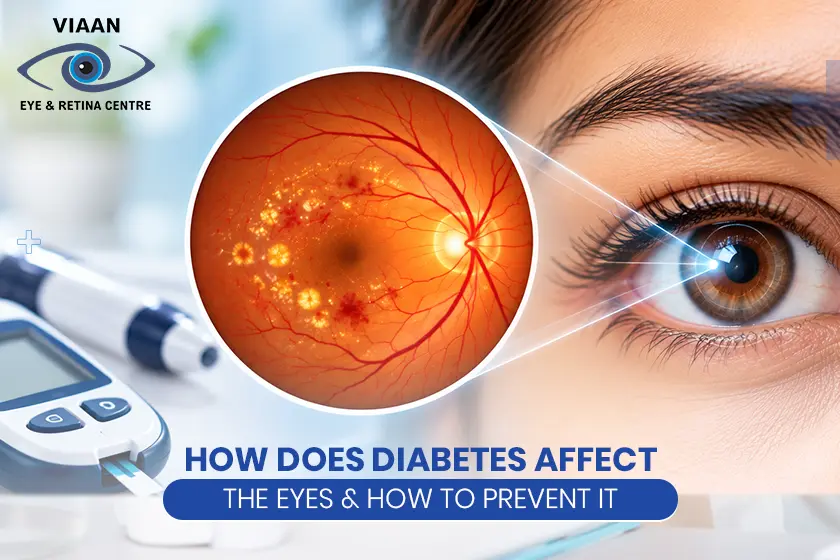
Diabetes can affect many parts of the body, including the eyes. When blood sugar stays high for a long time, it can damage the tiny blood vessels inside the retina. This is one of the main reasons the diabetes effect on eyes should never be ignored.
Some diabetic eye problems develop slowly and may not cause clear symptoms in the beginning. That is why regular eye check ups are so important, even when your vision feels normal. Early detection gives you a better chance to protect your eyesight.
Why Does Diabetes Affect the Eyes?
The retina is the light sensitive layer at the back of the eye. It depends on healthy blood vessels to work properly.
When blood sugar remains high these small vessels can become weak, leak fluid or become blocked. Over time, this may affect vision.
The diabetes effect on eyes can be mild at first but it may become more serious if the condition is not managed well. Many diabetic eye problems also develop without obvious warning signs, which makes regular eye exams even more important.
How Diabetes Can Damage Your Eyes Over Time
Diabetic Retinopathy
Diabetic retinopathy is one of the most common eye conditions linked with diabetes.
It happens when high blood sugar damages the blood vessels in the retina. In the early stage, a person may not notice any change in vision. Later, vision may become blurry, dark spots may appear or sight may become more difficult.
The diabetes effect on eyes is often discussed in connection with diabetic retinopathy because the condition can lead to serious vision loss if it progresses.
Among different diabetic eye problems, this is one that needs regular monitoring.
Diabetic Macular Edema
The macula is the central part of the retina that helps with sharp, detailed vision.
Sometimes damaged retinal blood vessels leak fluid into this area. This is known as diabetic macular edema.
It can make tasks such as reading, recognising faces or seeing fine details harder.
This is another example of how the diabetes effect on eyes may slowly change daily vision. Diabetic macular edema can occur along with diabetic retinopathy, so routine retinal checks are important for people living with diabetes.
Diabetes Can Also Increase Cataract Risk
Diabetes does not affect only the retina.
People with diabetes can also have a higher risk of developing cataracts. A cataract makes the natural lens of the eye cloudy, which can lead to blurred or dull vision.
This means diabetic eye problems can affect different parts of the eye, not just one area.
If vision starts looking cloudy or colours seem less bright, it is worth getting your eyes checked rather than assuming it is simply an age related change.
Glaucoma and Diabetes
People with diabetes are also at higher risk of glaucoma. Glaucoma can damage the optic nerve, which carries visual information from the eye to the brain.
The diabetes effect on eyes can therefore involve several different conditions.
Some forms of glaucoma may develop quietly, without causing much trouble in the early stage. This is another reason why waiting for symptoms is not the best plan.
Regular eye exams can help detect diabetic eye problems before they cause major changes in vision.
What Symptoms Should You Watch For?
Early diabetic eye disease may have no symptoms at all. When symptoms do appear they should not be brushed aside.
Watch for changes such as:
-
Blurry or cloudy vision.
-
Dark spots or floating shapes.
-
Difficulty seeing fine details.
-
Sudden changes in vision.
-
Areas of vision that appear dark or missing.
-
Trouble seeing clearly at night.
Not every vision change means diabetes is the cause but these signs should be checked.
The diabetes effect on eyes is easier to manage when changes are found early.
Keep Your Blood Sugar Under Control
Good diabetes management is one of the most important ways to protect your eyes.
Keeping blood glucose within the range recommended by your doctor may help reduce the risk or slow the progress of diabetic eye problems. Healthy eating, physical activity and taking prescribed medicines can all play a part.
The diabetes effect on eyes is closely linked with long term diabetes control, so eye health and general health should be managed together.
Do Not Ignore Blood Pressure and Cholesterol
Blood sugar gets most of the attention but it is not the only thing that matters.
Managing blood pressure and cholesterol is also important for people with diabetes. These factors can affect blood vessel health throughout the body, including the eyes.
A simple routine can help:
-
Take medicines as advised by your doctor.
-
Keep regular diabetes follow up appointments.
-
Stay physically active where medically suitable.
-
Follow a balanced diet.
-
Avoid smoking.
-
Get your eyes examined regularly.
These habits can support overall health while also lowering the risk of diabetic eye problems.
Get Regular Dilated Eye Exams
This is one step that people sometimes delay because their vision seems fine.
That can be risky.
Diabetic retinopathy may start before you notice any problem with your eyesight. The National Eye Institute recommends that people with diabetes have a comprehensive dilated eye examination at least once a year, although your eye doctor may suggest a different schedule depending on your condition.
Regular examinations can identify the diabetes effect on eyes at an earlier stage and give your doctor a chance to act before serious vision loss develops.
What If an Eye Problem Is Found?
Finding a problem does not automatically mean you will lose your eyesight.
Depending on the condition and stage, treatment may include careful monitoring, injections, laser treatment or surgery. The right option depends on what is happening inside the eye.
Early detection and timely treatment can greatly reduce the risk of severe vision loss from diabetic eye disease.
So, if diabetic eye problems are found, regular follow up matters just as much as the first diagnosis.
Never Wait for Vision to Become Poor
One of the tricky things about diabetes related eye disease is that early damage may happen quietly.
You may still read clearly, drive normally and feel that everything is fine.
But the diabetes effect on eyes may already have started.
That is why preventive eye care works better than waiting for noticeable symptoms. If you have diabetes, keep your regular eye appointments even when your vision seems completely normal.
Conclusion
Diabetes can affect the retina, macula, lens and other parts of the eye. The best part is that many serious diabetic eye problems can be detected early through regular eye examinations. Keeping blood sugar, blood pressure and cholesterol under control can also help protect your vision.
Understanding the diabetes effect on eyes is the first step towards taking eye health seriously. If you notice blurred vision, floaters, sudden visual changes or simply need your regular diabetic eye check up, do not delay an examination.
If you are searching for the best retina specialist in Gurgaon, Viaan Eye and Retina Centre provides specialised retinal evaluation and eye care for patients who need monitoring, diagnosis and treatment for diabetes related eye concerns.