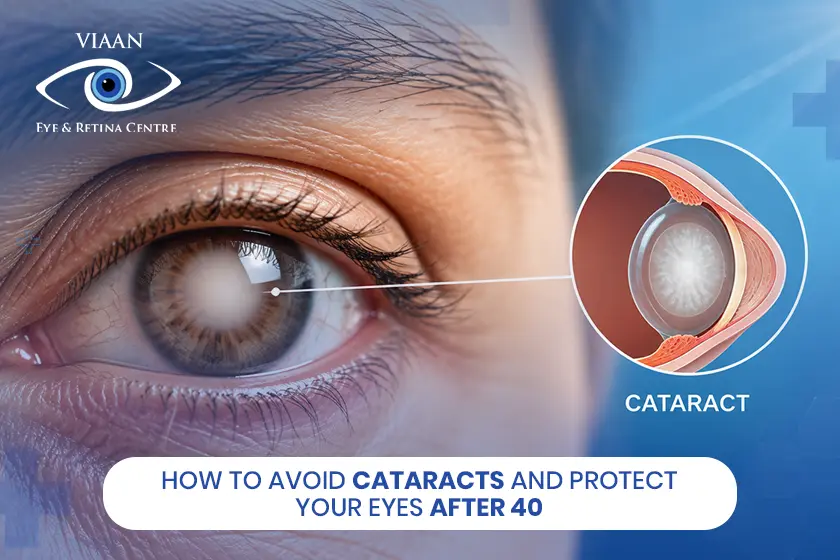
Turning 40 often makes people pay closer attention to their health but eye care can still get pushed aside. Cataracts happen when the natural lens of the eye becomes cloudy and age is one of the main risk factors.
They usually develop slowly.
Learning how to avoid cataracts is therefore less about a guaranteed prevention method and more about lowering avoidable risks and protecting your eyes as you grow older.
How to Avoid Cataracts With Everyday Lifestyle Changes
1. Protect Your Eyes From UV Rays
Long term exposure to ultraviolet light is linked with a higher risk of cataracts. The National Eye Institute recommends sunglasses that block 99% to 100% of both UVA and UVB radiation.
If you are wondering how to avoid cataracts after 40, sun protection is one of the easiest habits to start.
-
Choose sunglasses with strong UVA and UVB protection.
-
Wear them on bright days, even when it is slightly cloudy.
-
Add a wide brimmed hat when spending a long time outdoors.
-
Never look directly at the sun.
A good pair of sunglasses is not just about style. It is simple everyday eye protection.
2. Stop Smoking
Smoking is harmful to the eyes as well as the rest of the body. The CDC says smoking increases the risk of cataracts, while quitting may help lower that risk.
So, when people ask how to avoid cataracts, stopping smoking deserves serious attention. It cannot undo changes already present in the eye but it removes a known risk factor and supports better overall health.
If quitting feels difficult, speak with a doctor about suitable support.
3. Keep Diabetes Under Control
People with diabetes have a higher risk of cataracts and may develop them at a younger age. High blood sugar can contribute to changes inside the eye’s lens.
For someone living with diabetes, how to avoid cataracts also means managing blood sugar with medical guidance. Take medicines as advised, attend regular health checks and follow the diet and activity plan recommended by your healthcare team.
Regular eye examinations are especially important when you have diabetes. Do not wait until your vision becomes blurry before booking one.
4. Eat a Balanced Diet
There is no single food that can guarantee cataract prevention. Still, a balanced diet supports general eye health and the National Eye Institute includes healthy eating among the habits that can help protect vision.
A sensible approach to how to avoid cataracts is to focus on everyday nutrition instead of chasing a special “eye health” food.
Try to include:
-
Green leafy and colourful vegetables.
-
Fresh fruits.
-
Whole grains.
-
Healthy sources of protein.
-
Nuts and seeds.
-
Enough water during the day.
Simple, balanced meals are a better long term habit than following short lived diet trends.
5. Protect Your Eyes From Injury
An eye injury can sometimes contribute to cataract formation. Protective eyewear is therefore important when there is a chance that dust, tools, chemicals or flying material could enter or hit the eye. Guidance for reducing cataract risk also recommends protecting the eyes from injury.
Wear suitable safety glasses during repair work, certain sports or jobs that put the eyes at risk. This may seem like a small step but it can protect you from serious eye problems later.
6. Do Not Ignore Changes in Vision
Cataracts often develop slowly. Common symptoms can include blurry or cloudy vision, faded colours, glare, trouble seeing at night and changes in vision.
Knowing how to avoid cataracts should go together with knowing when to get your eyes checked. If night driving becomes harder, lights seem unusually bright or your vision feels cloudy, do not simply put it down to age.
An eye examination can help identify whether cataracts or another eye condition is causing the change.
7. Make Eye Exams Part of Life After 40
Regular eye examinations allow an eye doctor to check your vision and look for signs of eye conditions. Cataracts can be diagnosed through a dilated eye examination.
This is an important part of understanding how to avoid cataracts and protecting your sight over time. You do not need to worry about every small change but you should know what is happening with your eyes.
Your eye doctor can suggest how often you need examinations based on your age, medical history, existing health conditions and current eye health.
Can Cataracts Be Completely Prevented?
Not always. Ageing remains a major risk factor and there is no proven medicine that can completely remove an established cataract. Surgery is currently the only way to remove a cataract once it has formed.
So, how to avoid cataracts is better understood as lowering your risk where possible. Sun protection, quitting smoking, managing diabetes, eating well, preventing eye injuries and having regular eye checks are sensible steps.
Conclusion
Protecting your eyesight after 40 does not need a complicated routine.
Small daily choices can support healthier eyes and help you notice problems before they begin affecting reading, driving, work or other normal activities.
If a cataract develops, an eye examination can show how much it is affecting your vision and whether treatment is needed.
If you are looking for the best cataract surgeon in Gurgaon, Viaan Eye and Retina Centre can help with detailed eye evaluation, cataract assessment and treatment planning based on your individual vision and eye health.