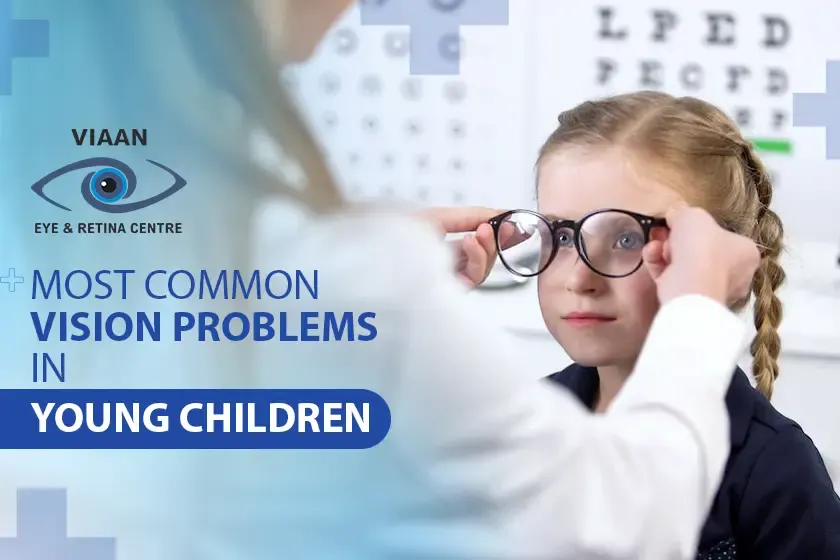
Young children do not always know when their vision is unclear. They may simply move closer to the television, hold books near their face or avoid tasks that feel difficult. This is why parents should know about common children’s eye problems and watch for small changes in daily behaviour.
One common concern is myopia in children, also called nearsightedness. It makes distant objects look blurry while nearby objects remain clearer. But myopia is not the only issue. Squint, lazy eye, farsightedness and astigmatism can also affect how a child sees and learns.
Why Eye Problems Can Be Hard to Notice
Many children’s eye problems develop quietly. A young child may assume that everyone sees the world the same way, so they may never complain.
Parents may notice squinting, eye rubbing or trouble seeing the board. This is common with myopia in children, where distance vision becomes blurry. Regular screening can help find problems early.
Common Eye Problems in Children Every Parent Should Know
1. Myopia or Nearsightedness
Myopia means a child can usually see nearby objects more clearly than things far away. A classroom board, road sign or distant face may look blurry.
Common signs of myopia in children include squinting, sitting close to the TV or struggling to see far away.
Among children’s eye problems, myopia matters because it can progress as a child grows. An eye examination can show whether vision correction is needed.
2. Hyperopia or Farsightedness
Hyperopia is often called farsightedness. Depending on the degree and the child’s age, near tasks may become tiring or blurry.
Some children may have headaches, eye strain or trouble with close work. Like other children’s eye problems, hyperopia should be checked properly instead of guessed from behaviour alone.
3. Astigmatism
Astigmatism happens when the shape of the eye causes light to focus unevenly. This can make vision look blurry or distorted at different distances.
A child may squint, have tired eyes or find reading uncomfortable. Sometimes astigmatism appears with myopia in children or farsightedness. Children may adapt to blur, so screening still matters.
4. Amblyopia or Lazy Eye
Amblyopia happens when vision does not develop properly in one or both eyes. It can be linked with unequal prescription, squint or another problem that blocks clear vision.
Amblyopia is one of the children’s eye problems where early detection matters. Treatment may include glasses, patching or other specialist care. Earlier detection and treatment generally improve the chance of better vision development.
5. Strabismus or Squint
Strabismus means the eyes do not point in the same direction. One eye may turn inward, outward, upward or downward.
Some cases are easy to notice, while others come and go. Strabismus can sometimes lead to amblyopia if the brain starts relying more on one eye.
6. Eye Strain and Screen Related Discomfort
Long periods of reading or screen use may leave a child’s eyes tired or uncomfortable. They may rub their eyes, blink more or complain of headaches.
Screen use does not automatically mean a child has myopia in children but regular breaks and suitable viewing distance can help with comfort. If symptoms continue, an eye check is sensible.
What Signs Should Parents Watch For?
Children may not directly say that they cannot see properly. Their behaviour often gives the first clue.
Watch for:
- Frequent squinting or closing one eye.
- Sitting very close to the television or board.
- Holding books or devices unusually close.
- Frequent eye rubbing.
- Headaches after reading or schoolwork.
- One eye turning in or out.
- Complaining of blurry or double vision.
These signs can appear with several children’s eye problems, including myopia in children, so an eye specialist should identify the real cause.
Why Regular Vision Checks Is Important?
Young children may have reduced vision without realising it. Vision screening is designed to find refractive errors, amblyopia, strabismus and other problems early. Routine screening throughout childhood helps identify issues before they cause lasting vision problems.
Regular checks are helpful when there is a family history of glasses, squint or other children’s eye problems. For myopia in children, early diagnosis also helps families plan correction and follow up.
Can Eye Problems Affect Learning?
Clear vision supports reading, writing, seeing the board and classroom participation. A child who cannot see clearly may seem distracted or avoid some tasks.
This is another reason children’s eye problems deserve attention. Correcting the vision issue may make school activities easier.
What Can Parents Do at Home?
Parents cannot diagnose an eye condition at home but they can notice changes and support healthy habits.
Encourage breaks from long periods of close work, outdoor time and good reading light. For children already diagnosed with myopia in children, glasses and follow up should be used as advised.
When Should You See an Eye Specialist?
Arrange an eye examination if your child often squints, moves close to objects, has an eye that turns or reports blurry vision. Seek prompt care for sudden vision loss, eye injury, severe pain or sudden double vision.
Early attention is especially useful for children’s eye problems that can affect visual development.
Conclusion
Young children can develop myopia, hyperopia, astigmatism, amblyopia, strabismus and other vision concerns. Because they may not know how clear vision should look, parents and teachers often play an important role in noticing the first signs.
Understanding myopia in children and other common vision problems can help families arrange timely screening and treatment when needed. If you are looking for a child eye specialist in Gurgaon, Viaan Eye and Retina Centre can help with eye evaluation, diagnosis and suitable care for children with vision concerns.