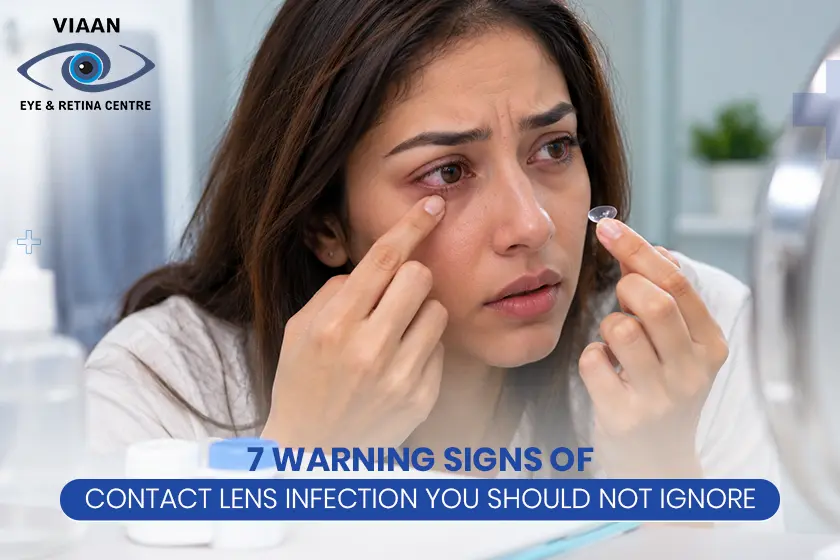
Contact lenses can make daily life easier, especially if you do not want to wear glasses. But they need proper care. Wearing lenses for too long, sleeping in them, touching them with unclean hands or using old lens solutions can cause problems.
A contact lens infection can start with mild discomfort and become serious if ignored. Your eyes often give warning signs early. Knowing what to look for can help you act before the problem gets worse.
Here are seven signs you should not ignore.
7 contact lens infection Signs You Should Never Ignore
1. Redness That Does Not Go Away
A little redness after a long day may not always be serious. But if your eye stays red even after you remove your lenses, it deserves attention.
A contact lens infection can cause redness because the surface of the eye becomes irritated or inflamed. The redness may affect one eye or both eyes.
Remove your lenses if the redness continues. Do not put them back in until your eyes feel normal or an eye doctor has checked them.
2. Eye Pain or Strong Discomfort
Contact lenses should not cause real pain. If you suddenly feel sharp pain, burning or strong discomfort, something may be wrong.
Pain can be an important warning sign of a contact lens infection, especially when it comes with redness, watering or blurred vision.
Do not keep wearing your lenses through the pain. Take them out and avoid rubbing your eyes. If the pain is strong or gets worse, seek medical care quickly.
3. Unusual Eye Discharge
Healthy eyes may sometimes have a small amount of discharge after sleep. Thick, sticky, yellow or green discharge is different.
This kind of discharge can happen with a contact lens infection. Your eyelids may also stick together, especially in the morning.
Wash your hands before touching the eye area and avoid sharing towels. Do not use someone else’s eye drops. If there is heavy discharge, get your eyes examined.
4. Blurred or Hazy Vision
Contact lenses can sometimes move slightly and make vision unclear for a moment. But ongoing blurred or hazy vision should not be ignored.
A contact lens infection may affect the clear front surface of the eye, which can make vision look cloudy or out of focus.
Take the lenses out and see whether your vision improves. If it stays blurred or suddenly becomes worse, contact an eye doctor as soon as possible.
5. Increased Sensitivity to Light
If normal indoor light or sunlight suddenly feels too bright your eye may be irritated. You may start squinting or prefer a darker room.
Light sensitivity can sometimes appear with a contact lens infection, especially when the cornea is affected.
Remove your lenses and rest your eyes. Strong light sensitivity with pain, redness or poor vision needs quick medical attention.
6. Too Much Watering
Watery eyes can happen because of dust, wind, allergies or tiredness. But sudden and constant watering while wearing contact lenses can be a warning sign.
When the eye is irritated, it may produce extra tears. If watering comes with pain, redness or discomfort, the cause may be more than simple dryness.
If several symptoms appear together, remove the lenses and avoid using them again until the eye has been checked.
7. Feeling Like Something Is Stuck in Your Eye
Sometimes a lens can move or trap a small particle under it. That can create a scratchy feeling. If the feeling remains after the lens is removed, the eye surface may be irritated.
A contact lens infection may make it feel as if there is sand, grit or something stuck in the eye.
Do not keep rubbing the eye. If the feeling continues, especially with pain or redness, arrange an eye examination.
What Should You Do If You Notice These Signs?
If you think something is wrong, the first step is simple: remove your contact lenses.
You should also:
-
Wash your hands before touching your eyes.
-
Do not wear the same lenses again until you know it is safe.
-
Avoid using old or shared eye drops.
-
Do not rinse lenses with tap water.
-
Keep your lens case clean and replace it regularly.
-
Use only fresh contact lens solution.
-
Follow the wearing schedule given by your eye doctor.
-
Seek medical care if pain, redness, discharge or blurred vision continues.
Quick action matters because some eye infections can worsen fast.
How Can You Lower the Risk?
Good lens habits can make a big difference. Always wash and dry your hands before handling lenses. Never sleep in them unless your eye doctor has said they are made for overnight wear.
Avoid swimming or showering while wearing contact lenses. Replace lenses and storage cases on time and never mix old solution with fresh solution.
Most importantly, do not wear lenses when your eyes already feel irritated. Giving your eyes a break is often the smarter choice.
Conclusion
A contact lens infection can begin with simple symptoms such as redness, watering, discomfort or blurred vision. These signs may look small at first but they should not be ignored if they continue or become worse. Removing your lenses early and getting the right advice can help protect your eyes and vision.
If you are worried about contact Lens Side Effects or repeated eye irritation, Viaan Eye and Retina Centre can help identify the cause and guide you toward the right care.
Regular eye checks, clean lens habits and quick action when symptoms appear can go a long way in keeping your eyes comfortable and healthy.